


Cretan Renaissance
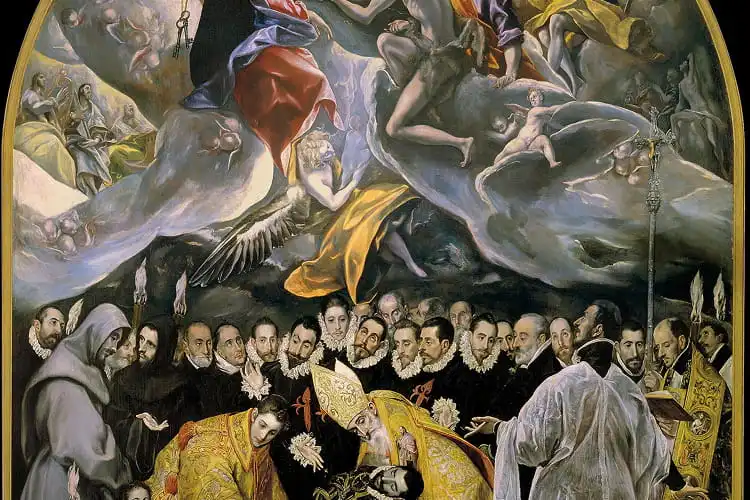
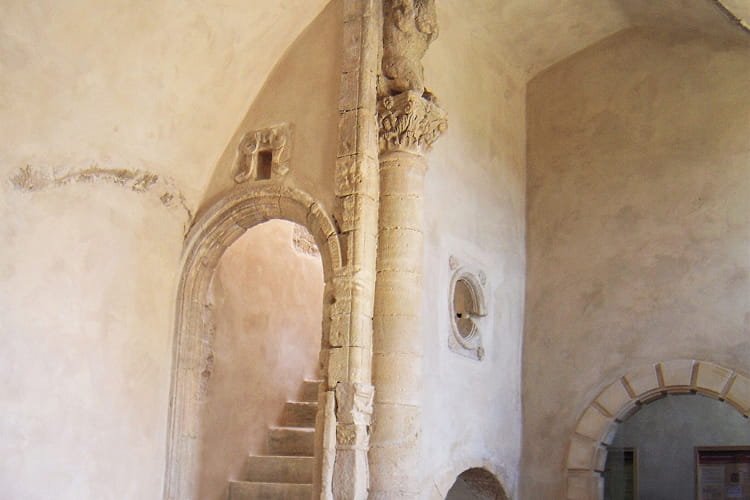
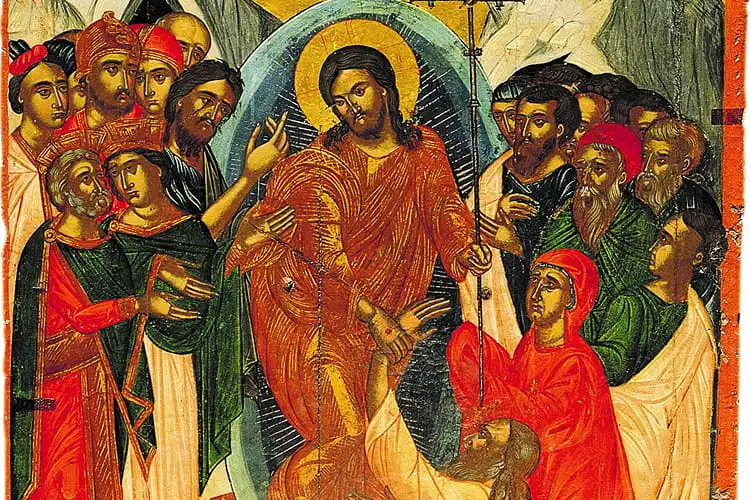
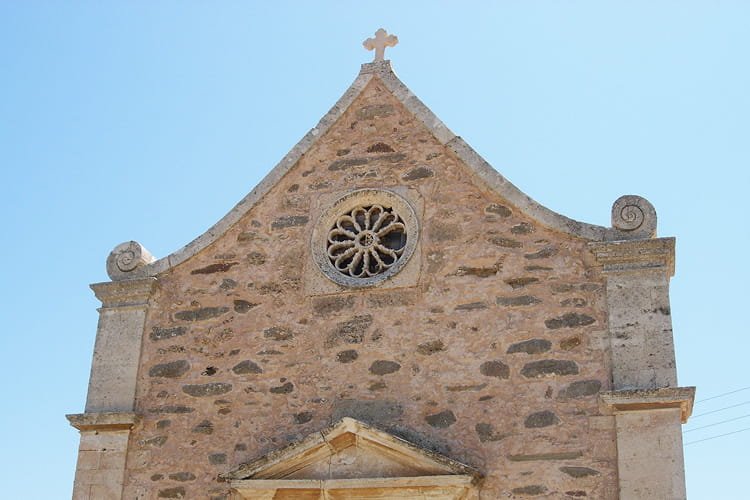
Table of Contents
From the 13th to the 17th century, Crete was the meeting point between East and West. A product of the creative coexistence of Greek cultural tradition, which after the fall of Constantinople in 1453 attracted many of its forces to the large island, with the Venetian cultural tradition, which was shaped by the Italian Renaissance movement from the 14th to the 16th century, was what some researchers call the Cretan Renaissance, which lasted from the 15th or early 16th century until the Ottoman conquest in 1669.
Noble Greeks from Crete spoke and wrote Italian, traveled and studied in Italy, and adopted Western lifestyles. Many Venetian Cretans now spoke Greek and lived according to the Greek way of life. Greek printers in Italy had already begun systematically publishing Greek popular texts since the end of the 15th century. A respected circle of Greeks and Venetians with a classical education, artistic sensibility, scientific knowledge, and humanistic philosophy promoted Crete as a center of education and culture and spread Greek literature and artistic production throughout Europe. Intellectual life, especially in urban centres, is attested to by the operation of academies founded by intellectuals for the purpose of studying literary, philosophical and historical subjects and cultivating the arts, sciences and letters. The Academy of Vivi was founded in 1562 in Rethymno by the mathematician and astronomer Francesco Barozzi, the Academy of Stravaganti in 1591 in Chandaka by the historian and writer Andrea Cornaro, and the Academy of Sterili around 1637 in Chania.
The Cretan Renaissance, with its assimilation of European and mainly Italian models and their adaptation to the intellectual and cultural tradition of the island, usually surpassing their direct or indirect models in quality, bore fruit in literature, such as poetry and theater, but also in the arts, such as architecture, sculpture, painting, and music. The influence of all the derivatives of the Cretan Renaissance was decisive in shaping the modern Greek intellectual and artistic world.
Literature and theater
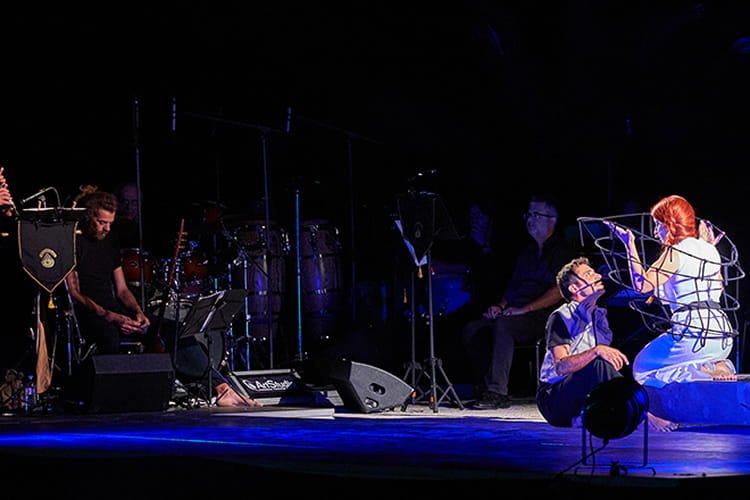
The literary production of Crete, based on Byzantine tradition and medieval Western poetry, reached its peak in terms of quantity and quality during the Renaissance, with a remarkable flourishing of theatrical discourse. Most texts were metrical, with exceptional mastery in the use of metrical phenomena, transforming the Cretan dialect into a literary language and becoming widely known to the Greek public.
The most important works of the golden age of Cretan literature and theater are the tragedy Erofili by Georgios Hortatzis, the comedies Katsourbos by Hortatzis and Fortounatos by Markantonios Foskolos, the pastoral drama Panoria by Hortatzis, the pastoral idyll Voskopoula, the religious drama The Sacrifice of Abraham, and the novel Erotokritos by Vitsentzou Kornaros.
A notable example of popular prose is the adaptation/translation of the novel Barlaam and Ioasaph by Nikiforos Venetzas, while the most important Italian-language work of the period is the Historia Candiana by Andrea Cornaro.
Architecture
Cretan architecture of the 16th and 17th centuries developed its own morphological vocabulary by studying the theoretical architectural treatises of Italy, drawing on the expertise of the engineers of the major fortification projects and urban planning interventions designed by the Venetian administration in Crete during this period and learning from the all’antica aesthetic of the craftsmen who implemented them.
The Renaissance revival of architecture and the spread of Mannerism were reflected in the construction of imposing fortifications at strategic points such as the walls of Chandax and the fortresses of Souda and Spinalonga, the construction of magnificent public buildings in urban centers such as the Loggia of Rethymno and Chandaka, as well as the erection of private residences, temples, aqueducts, roads, fountains, and other structures throughout the island.
Painting
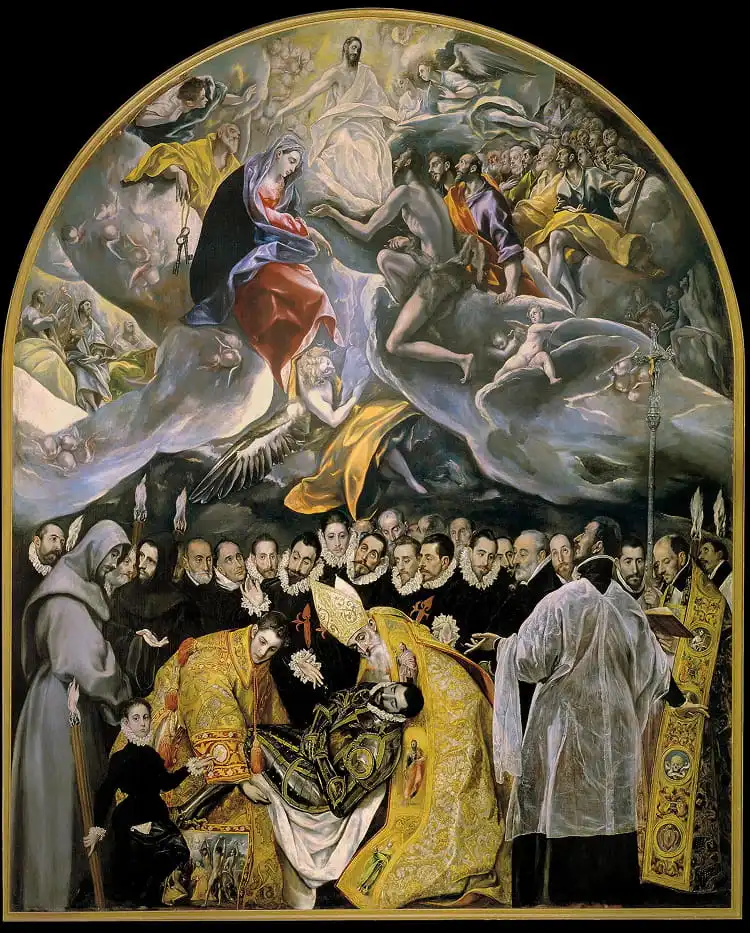
Religious painting in Crete had already acquired a distinctive character by the 15th century, following the Byzantine tradition and eclectically adopting elements of Italian painting. In particular, the art of portable icons was adapted to the needs of the mixed audience of Crete by skilled and versatile painters who expressed themselves both in the Byzantine aesthetic, a la greca, as well as in a mixed idiom, a la latina, leading the so-called Cretan school to full bloom with production sought after in Western Europe in the 16th and 17th centuries.
Some of the most important painters were Angelos Akotantos, Andreas Ritzos, Theophanes Kritos, Michael Damaskinos, and Georgios Klontzas. Another product of the Cretan Renaissance was the painter Domenikos Theotokopoulos (1540-1614), who studied in Crete and in 1567 left for Venice and then Toledo in Spain, where he became famous as El Greco.
The Cretan Renaissance in Sitia
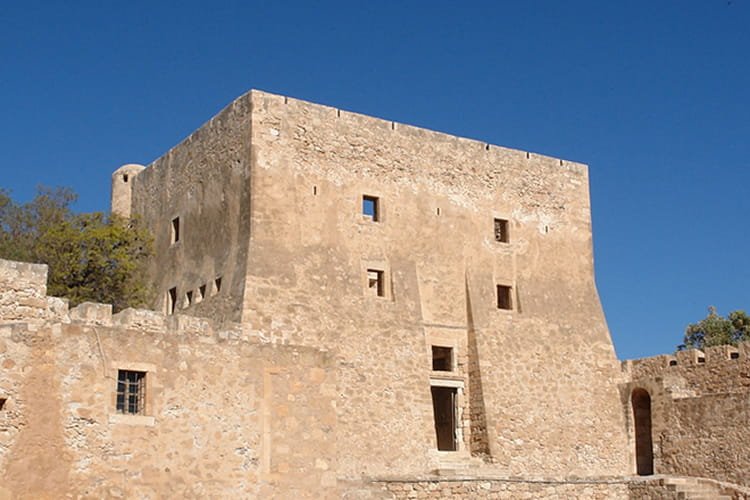
Despite the rural nature of the Cretan countryside, the nobles of Sitia, at least in the 16th and 17th centuries, had direct and ongoing contact with Chandaka and Venice. Families such as the Kornaros, Salomon, Barozzi, Demetzos, and Barbarigos had libraries, brought learned tutors to Sitia, studied in Italy, were familiar with developments in literature and art, and participated in the intellectual life of Crete and Italy. At the same time, there were highly educated clergymen in Sitia who stood out during this period, such as Meletios Pantogalos, Metropolitan of Ephesus (1631-1639), and his brother Gabriel Pantogalos, abbot of the then materially and spiritually rich monastery of Panagia Akrotiriani (Toplou).
The most important Renaissance product of Sitia was Erotokritos, inspired and written by Vitsentzos Kornaros. The only voluminous Italian-language work produced in Crete, and at the same time the first historical, political, and archaeological geography, and a witness to the ideological ferment of Cretan society, was Historia Candiana (History of Crete) by the poet’s prolific brother, Andreas Kornaros.
Developments in architecture and sculpture found their simplified expression in the fortified residences of Sitia, such as in Voila, Zou, Mouliana, and in individual ecclesiastical buildings such as the church of the Holy Cross in the Toplou Monastery. An excellent example is the Demetzos mansion in Etia, where the new morphological vocabulary was adopted with references to mythology and classical architecture.