


Language & Reception
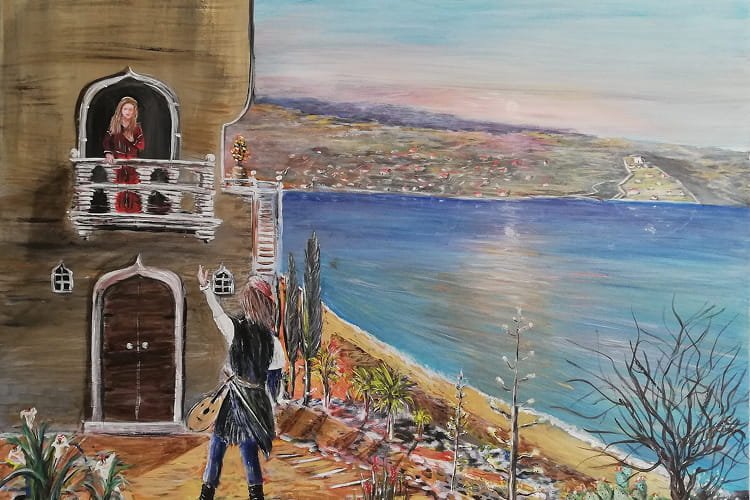
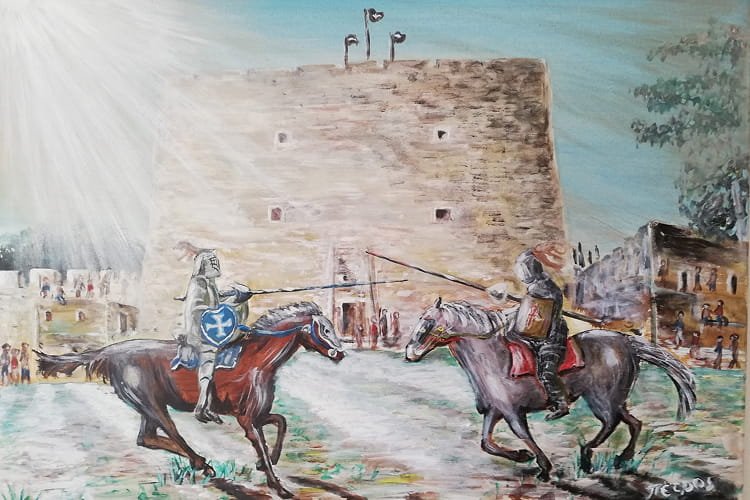
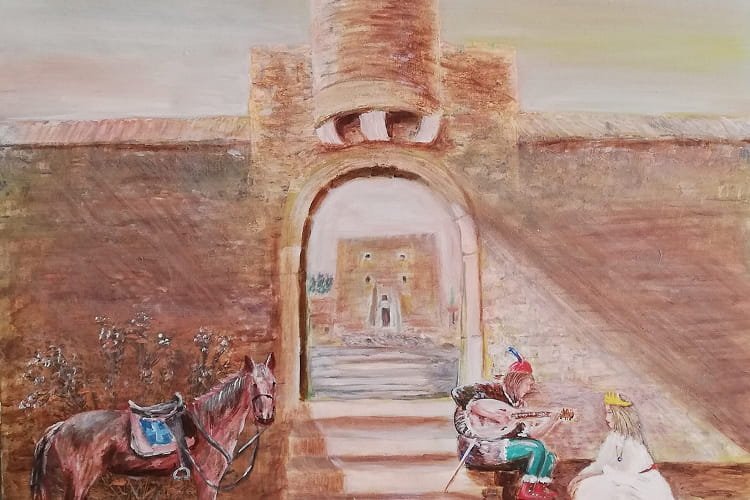

Vitsentzos Kornaros wrote Erotokritos in the Greek language, consciously employing the Cretan dialect of Eastern Crete, aiming to keep it free from scholarly and foreign words—in other words, from the mixed idiom used by other poets. According to St. Xanthoudidis, the language of Erotokritos is “the most genuine demotic,” primarily because it avoids forms and expressions that clash with the newer linguistic idiom.
The poem is structured in rhyming couplets, though quatrain rhymes are also present. The expression is meticulously crafted to convey the subtlest nuances, yet it never loses its naturalness. The verse is rhythmic, thanks to the variety of tones, synizeses, and the preservation of harmony in the number of words per verse and couplet. Perhaps this is why George Seferis speaks of a “poetic stride, an even and low tone that is among the most charming things poetry offers us.”
Erotokritos influenced Cretan works written both before and after the fall of Candia. However, it also gained widespread popularity among the people of Crete. According to the Cretan editor of Bortoli’s first edition (1713), Cretan refugees after 1669 carried the work with them among their possessions. It also had a significant impact on the Cretan folk couplet, known as the “mantinada.” The use of the demotic language appears to have been the primary reason for the work’s great appeal to the popular reading public and, simultaneously, for the decline in interest among intellectuals at the turn of the 18th to the 19th century. In 1818, Dionysios Foteinos adapted Erotokritos into Katharevousa and published it in Vienna under the title “Neos Erotokritos” (New Erotokritos).
The work’s dissemination among the people led to new approaches in literary criticism, especially after World War II. Extensive excerpts from Erotokritos were memorized in Crete, recited at gatherings and social events, set to music, and beloved by the people. In the Ionian Islands, Ilia, Amfissa, and elsewhere, folk carnival performances of adapted parts of the giostra are attested. Seferis recalls, in May 1941, as Chania was being bombed by the Germans, the itinerant booksellers in the streets of his childhood Smyrna, selling cheap editions of Erotokritos with “rose” or “pistachio” covers. In this way, the poet discovers in his seemingly fragmented memories an untapped national and transnational treasure that effortlessly and consistently guided the Greek nation from ancient Homeric times to Solomos and modernity.