Renaissance Printing Meets Cretan Literature
The VITZENSOS KORNAROS Cultural Center is honored to host, on its website, the student art group “Typotropion” from the Department of Graphic Design and Visual Communication at the University of West Attica on its website, presenting its educational program “Renaissance Typography Meets Cretan Literature Through Street Art.”
The purpose of this page is to introduce the “Typotropion” team, to present the historical context, objectives, activities, and results of the educational program in Crete, and to promote it with the ultimate goal of encouraging further applications by aspiring street artists.
Dr. George Matthiopoulos, professor and artistic director of the project, provided Stegi V.K. with the relevant informational material, text, and images, which are included on this page. In addition, Stegi V.K. has a digital folder containing illustrations based on couplets from Erotokritos in the Grecs du roi font, along with a guide for using the stencil letters, which can be sent upon contacting us by phone or email, to any school or other educational group wishing to carry out this activity.
The Renaissance Meets the Road
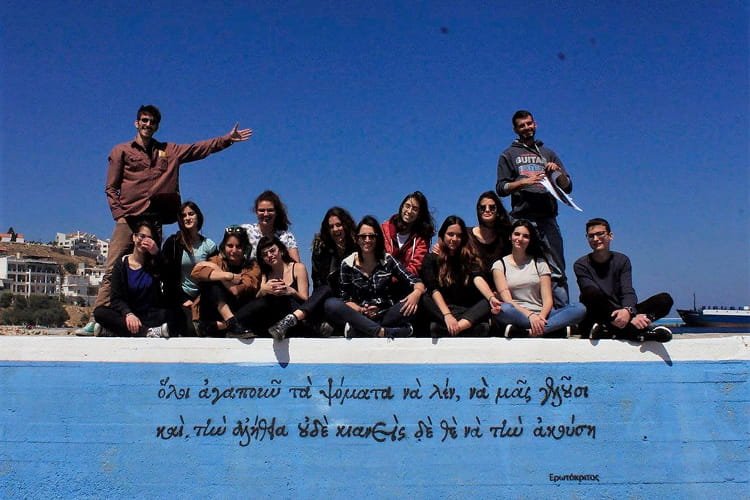
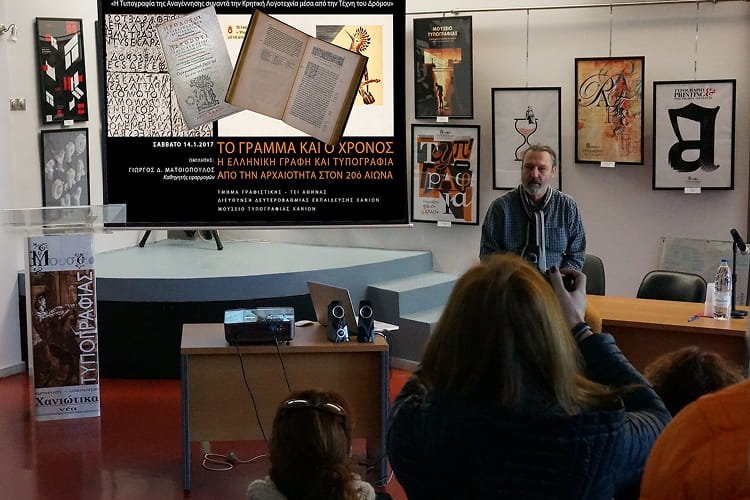
In October 2016, the student art collective “Typotropion” was formed within the Department of Graphic Design and Visual Communication at the University of West Attica, with Dr. George D. Matthiopoulos as its founder and supervising instructor and student Olga Bitsaki as the project’s general coordinator. The team’s primary goal was to develop an educational program in Crete that incorporated artistic activities and focused on Early Cretan Literature.
Many high school teachers and students from all over Crete actively participated in the program, and to carry it out, the team collaborated with Stelios Zervakis (Director of Secondary Education in Chania), Areti Marmataki (Head of School Activities for the Chania Secondary Education Directorate), Filitsa Pediaditi (Head of School Activities for the Lasithi Secondary Education Directorate), and Elia Koumi (Director of the Yannis & Eleni Garedaki Museum of Typography in Chania).
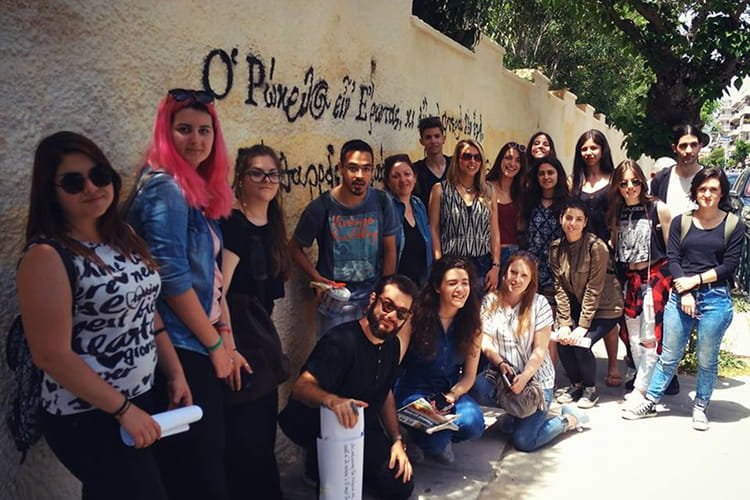
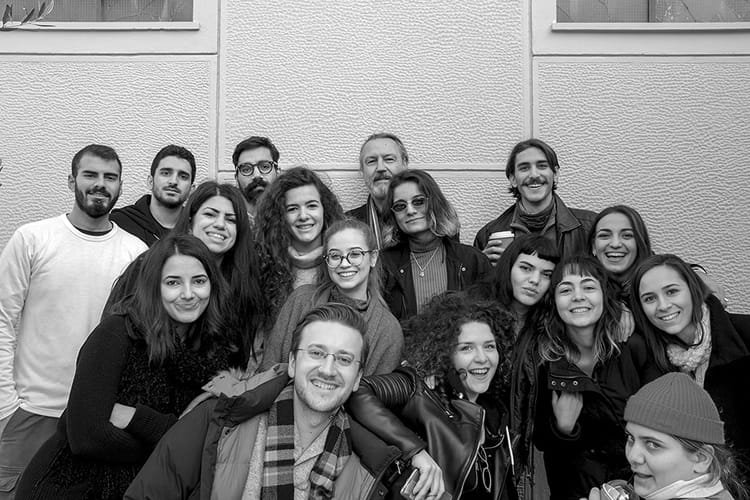
The black-and-white photograph shows the following members of the “Typotropion” group (from the back left): Vissarion Kyriakidis, Yannis Katsimbras, Giorgos Matthiopoulos, Christos Vasakakis, Giorgos Fratzeskakis, Anna Paliatsa, Olga Bitsaki, Nikoleta Tourlouki, Maira Bizimi, Evgenia Vrentzou, Katerina Stathaki, Theophano Katomonati, Dimitra Markaki, Alexandra Pasadaki, Alexander von Aikstett, Nikolia Grigoraki, Katerina Topi, while the following also participated: Lydia Aggelou, Maro Vlazaki, Eleni Kaparaki, Konstantina Katsantoni, Irini Katsarakis, Thanasis Katsougiannis, Mary Koutentaki, Michalis Liolios, Efi Nikolakaki, Vasilis Sourmelis, and Giannis Stavgianoudakis.
By studying the origins of Modern Greek literature through the Cretan theatrical works of Kornaros and Hortatsis, and the culmination of the stylistic evolution of post-Byzantine writing, we at “Typotropion” sought to fuse these elements visually through the contemporary expressive medium of street art, paying tribute to the unparalleled sensitivity of the Cretan calligrapher Angelos Vergikios and the masterful engraving skills of the typeface designer Claude Garamont.
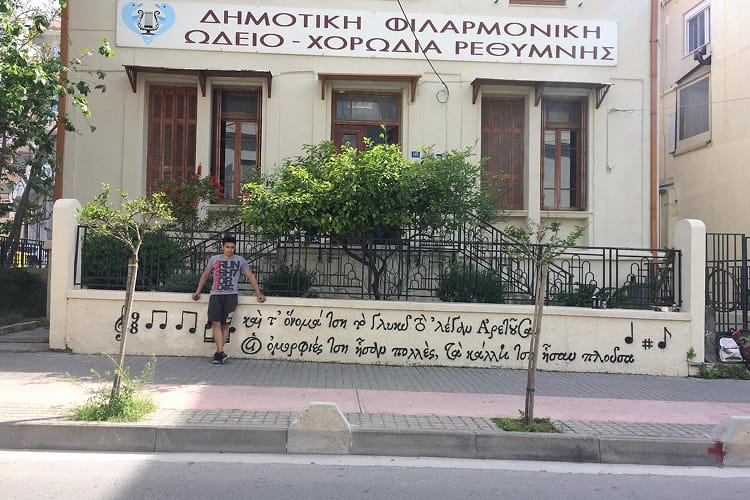
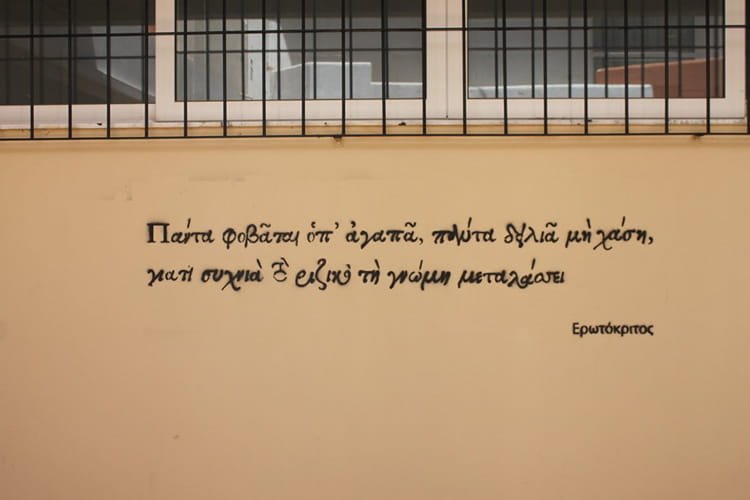
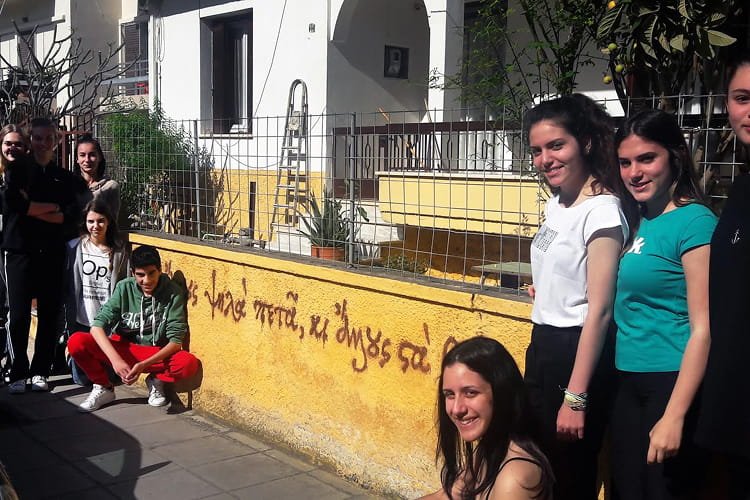
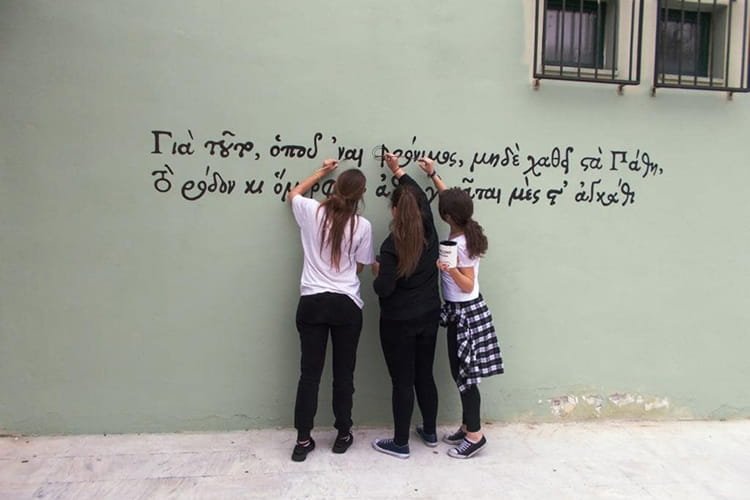
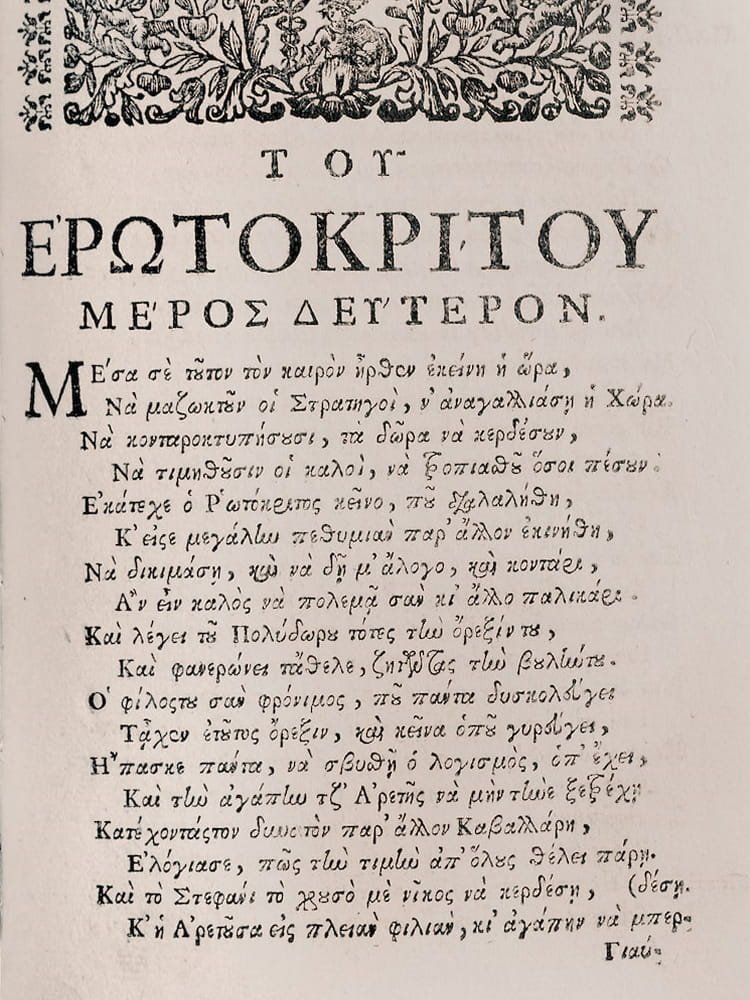
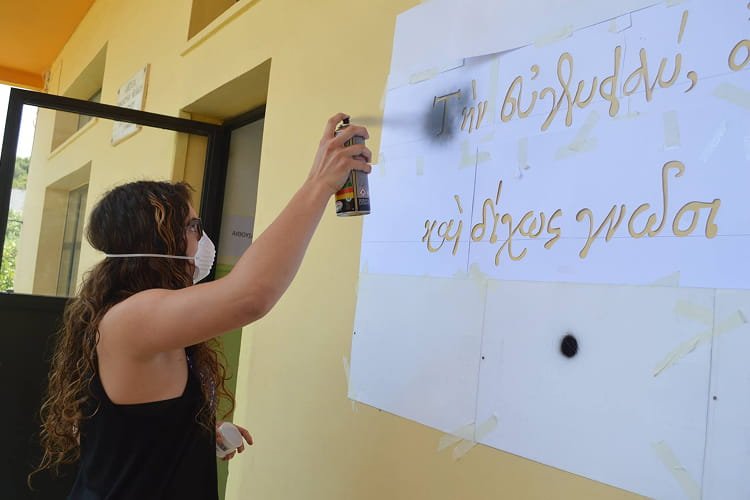
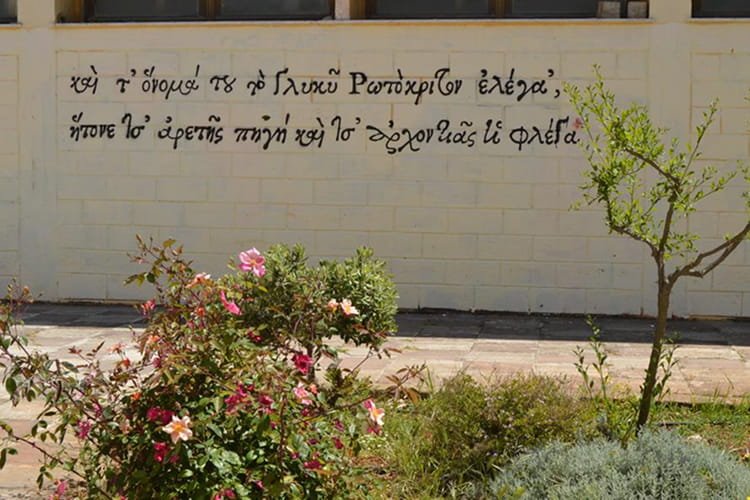
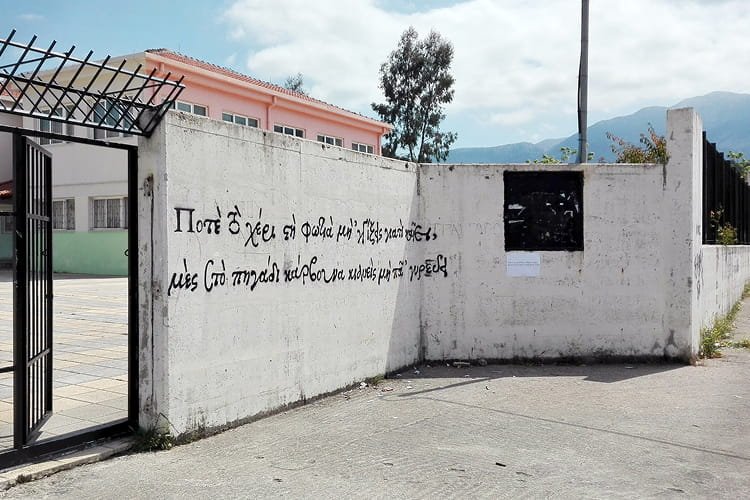
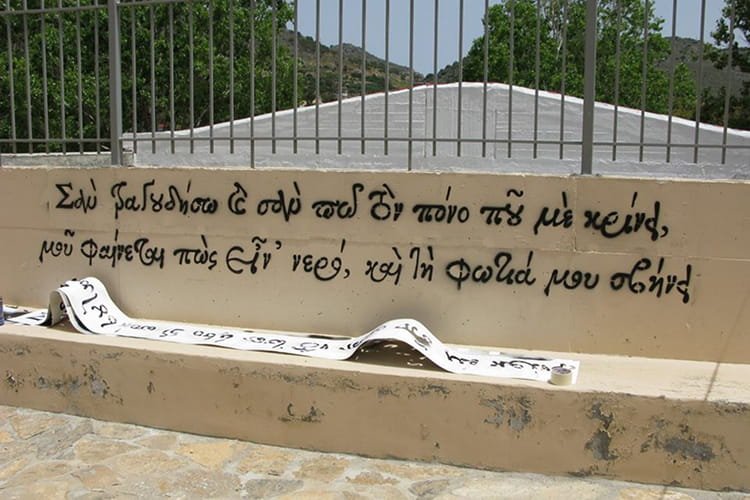
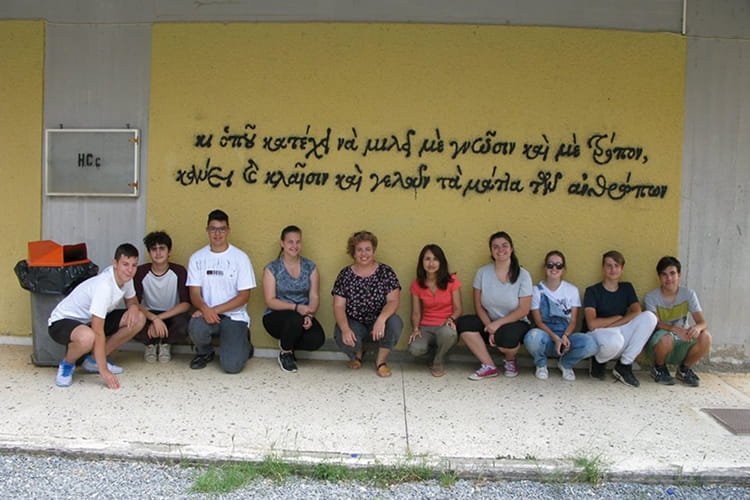
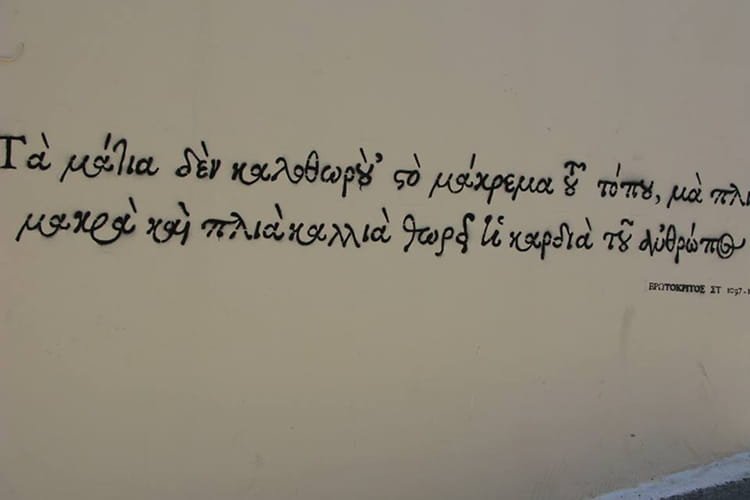
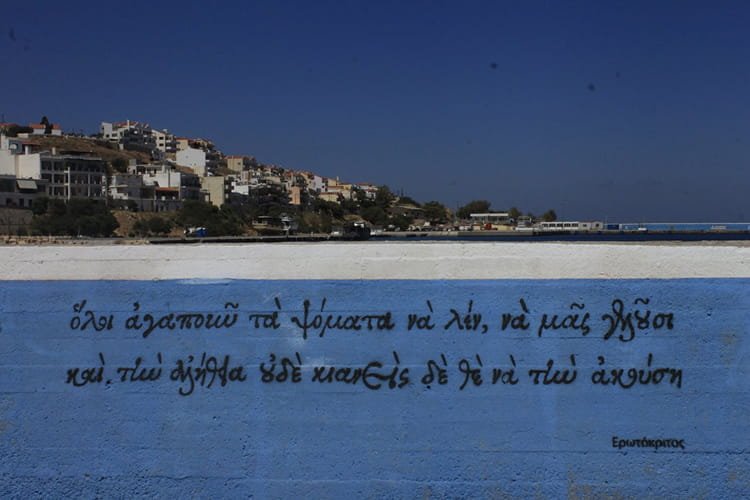
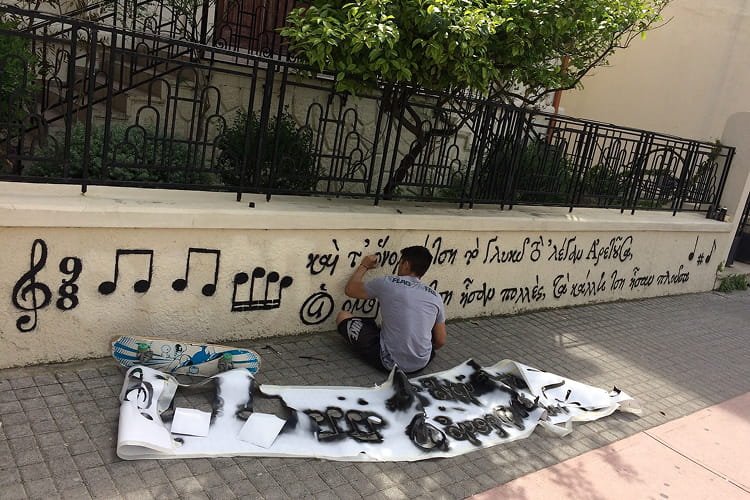
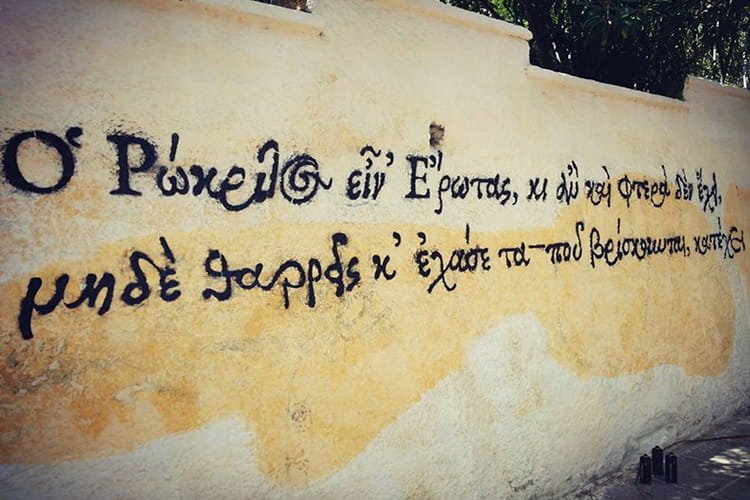
We created couplets from Erotokritos and Erofili using the Grecs du roi font in selected public and private spaces across Crete, hoping in this way to strengthen the younger generation’s connection to the content and poetic style of their ancestors and to rekindle the memories of older generations. At the same time, through our collaboration with the Technical and General High Schools of Crete, we aimed, under the guidance of volunteer teachers, to establish a dialogue with secondary education institutions to foster an understanding of Greek history and artistic expression through alternative channels of communication.
Our goal was to spark young people’s interest in engaging creatively with different forms of graphic expression, while also introducing them to the timeless works of Cretan literature through the medium of street art. Inspired by dynamic international artistic explorations, young people should learn how to blend these with the richness of tradition, thereby bringing the timeless achievements of Greek culture into the present.
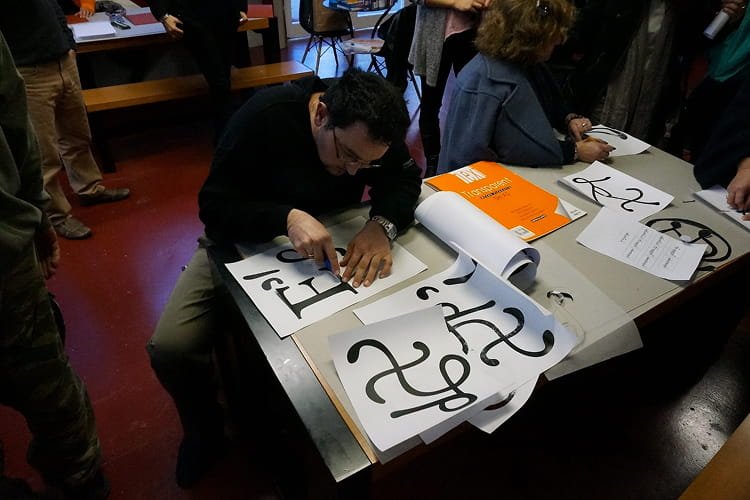
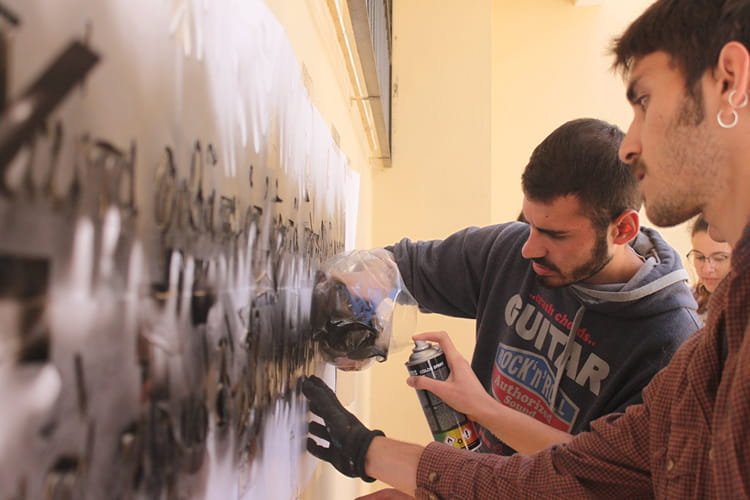
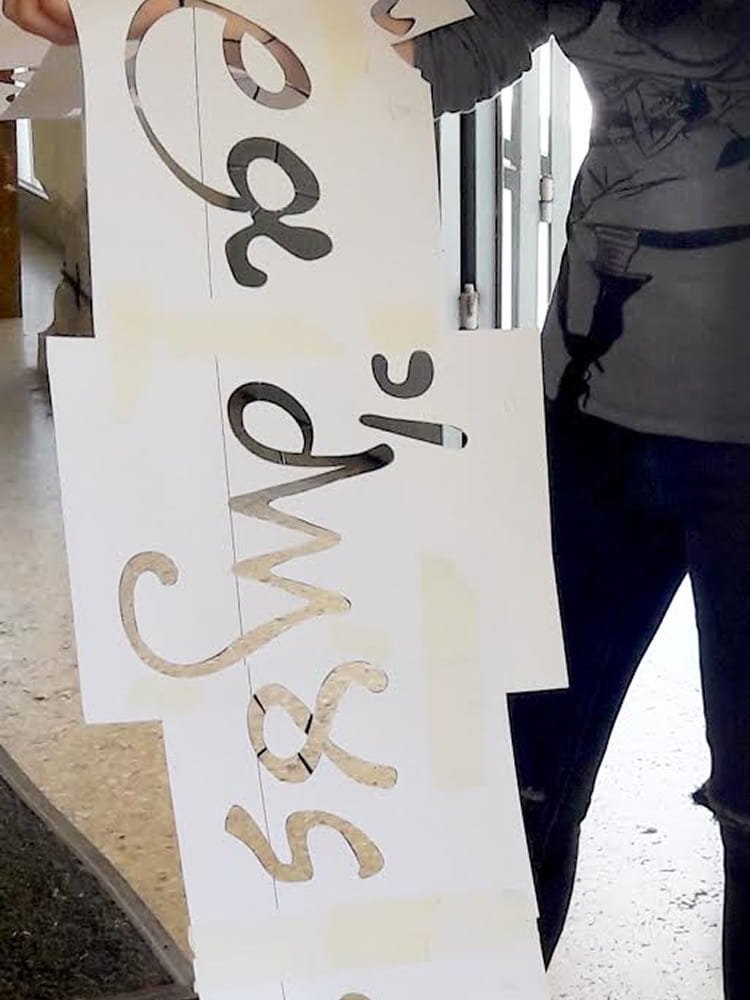
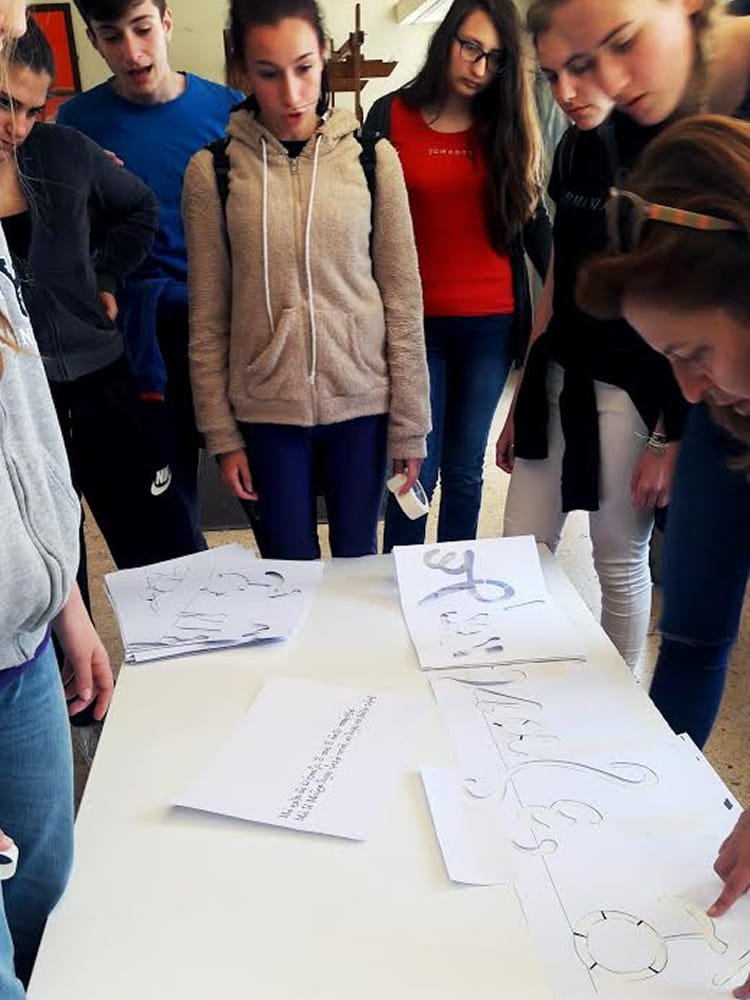
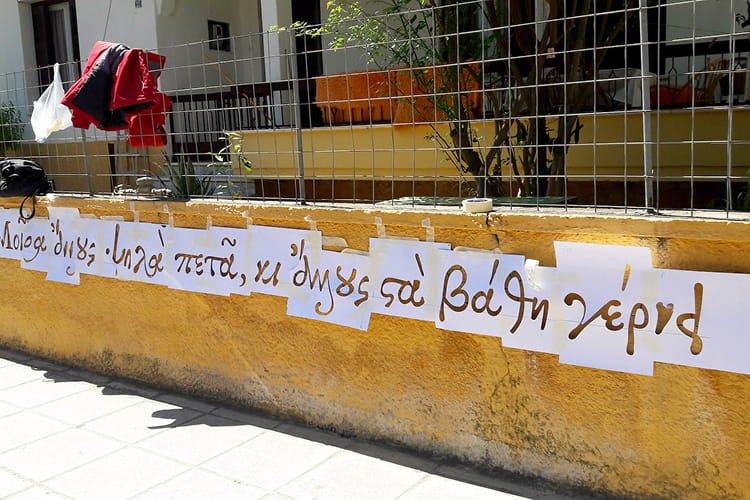
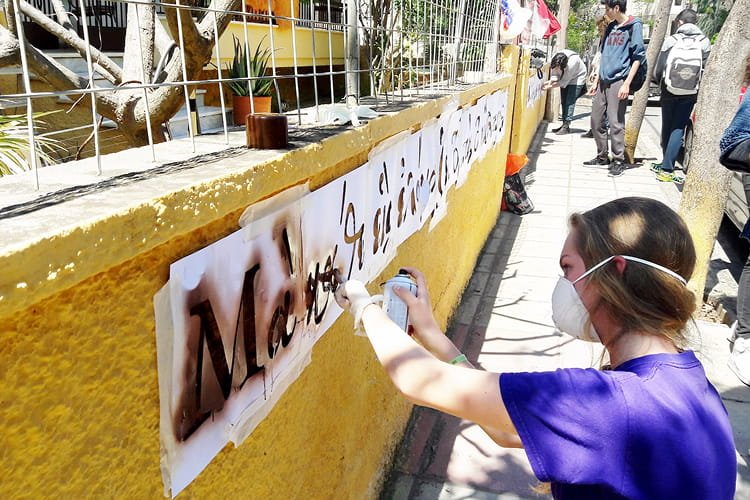
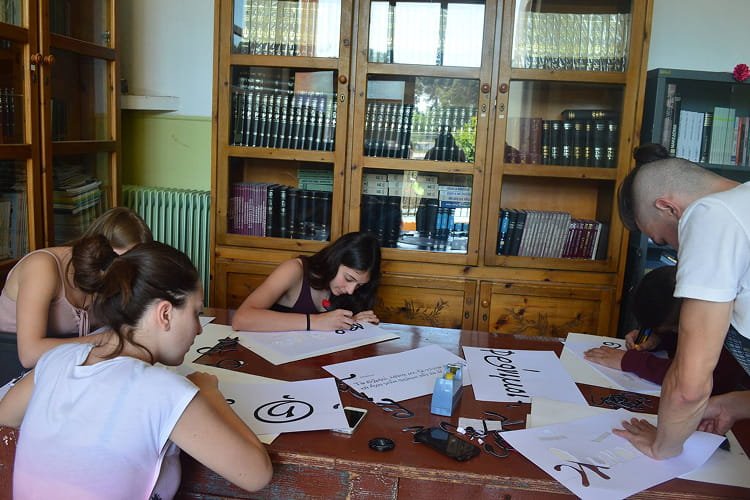
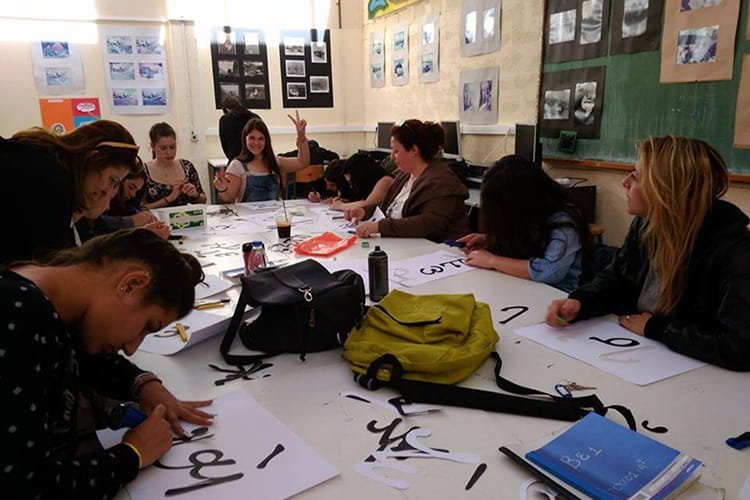
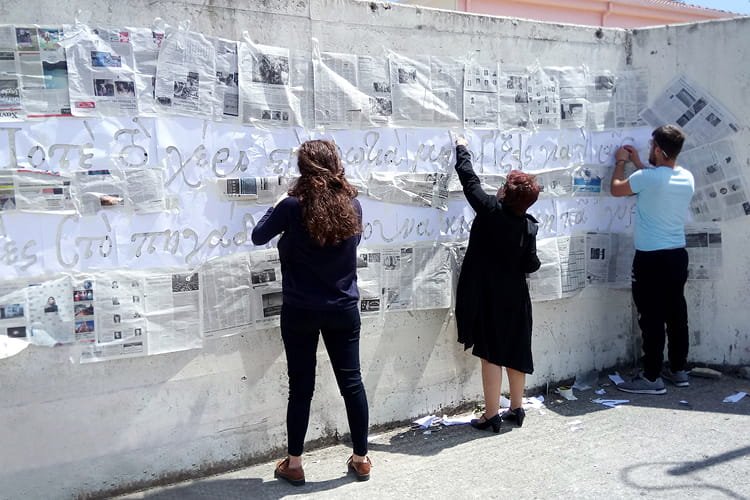
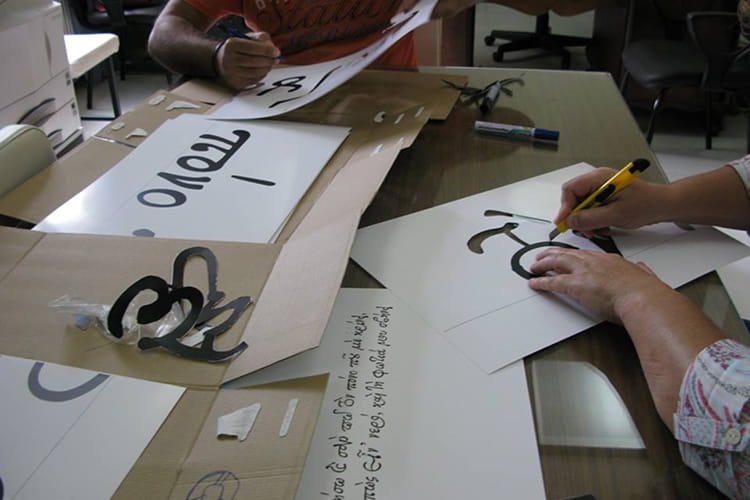
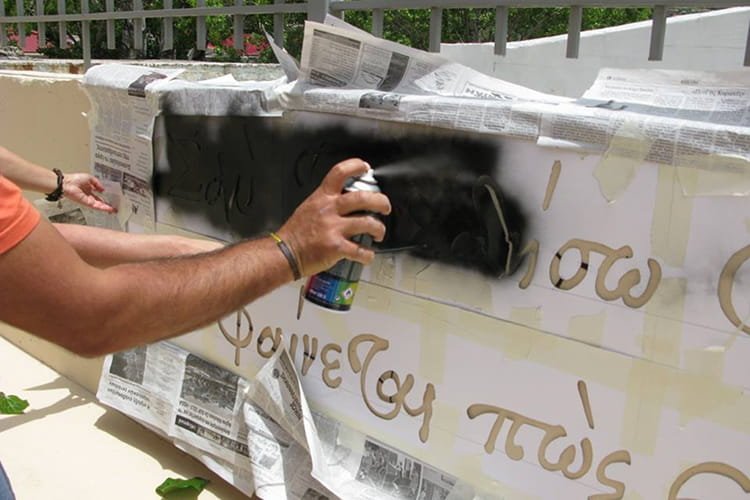
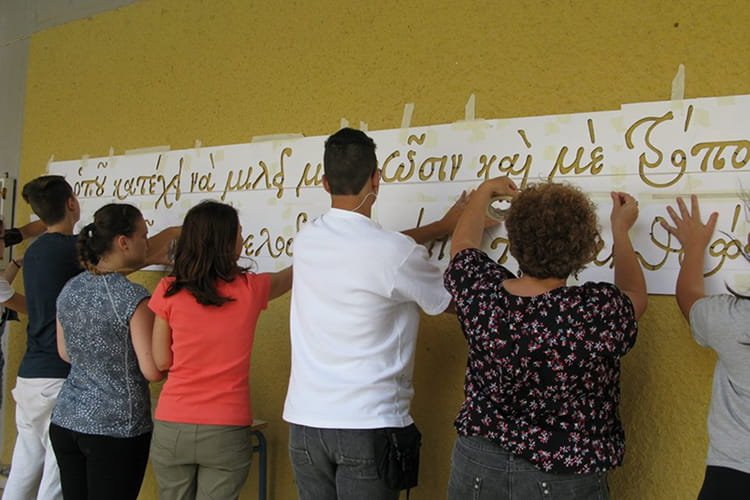
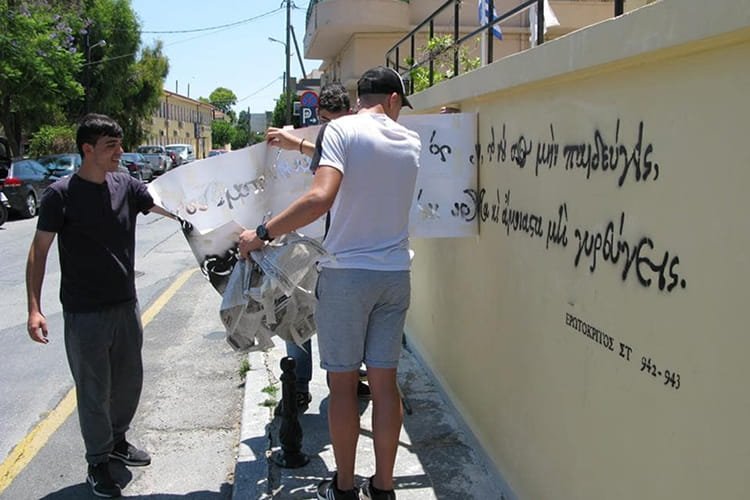
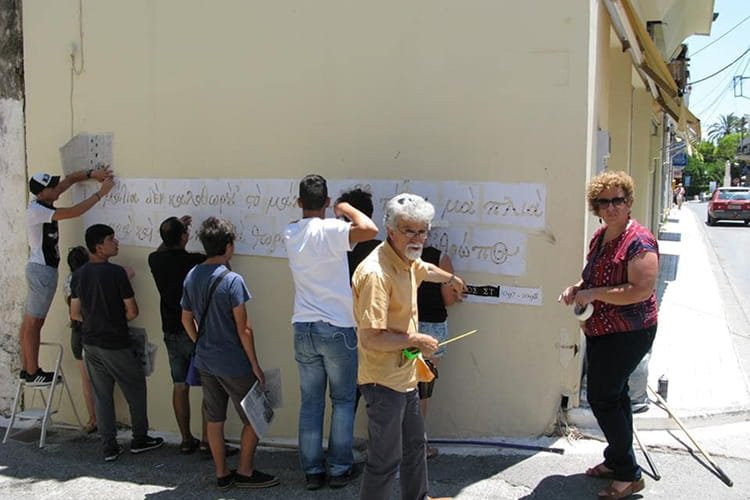
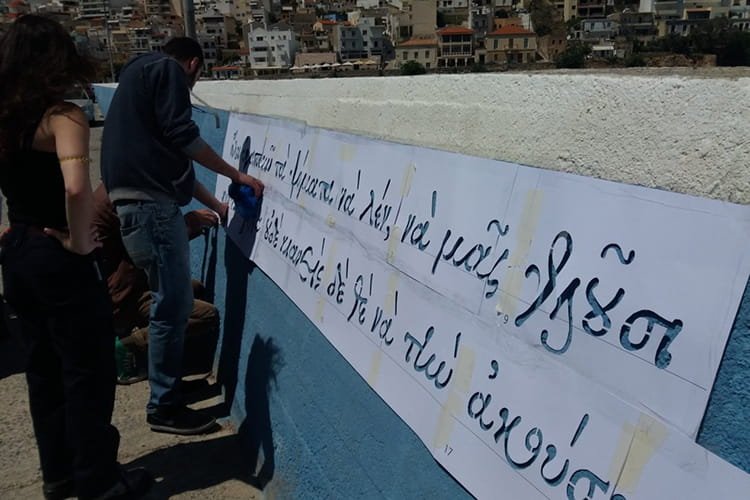
The Regional Cultural Network “Renaissance Typography Meets Cretan Literature Through Street Art” was established and approved by the Ministry of Education and the Regional Directorate of Education of Crete. The technical and general high schools in Crete that registered to participate formed volunteer working groups, identified locations, and—with the permission of the owners or local authorities—carried out the artistic project. The student coordinating group “Typotropion” produced the couplets (PDF files) so they could be cut out and used as stencils on the selected walls. Many groups also organized additional artistic activities within the school based on Cretan literature, such as songs, theatrical performances, and more.
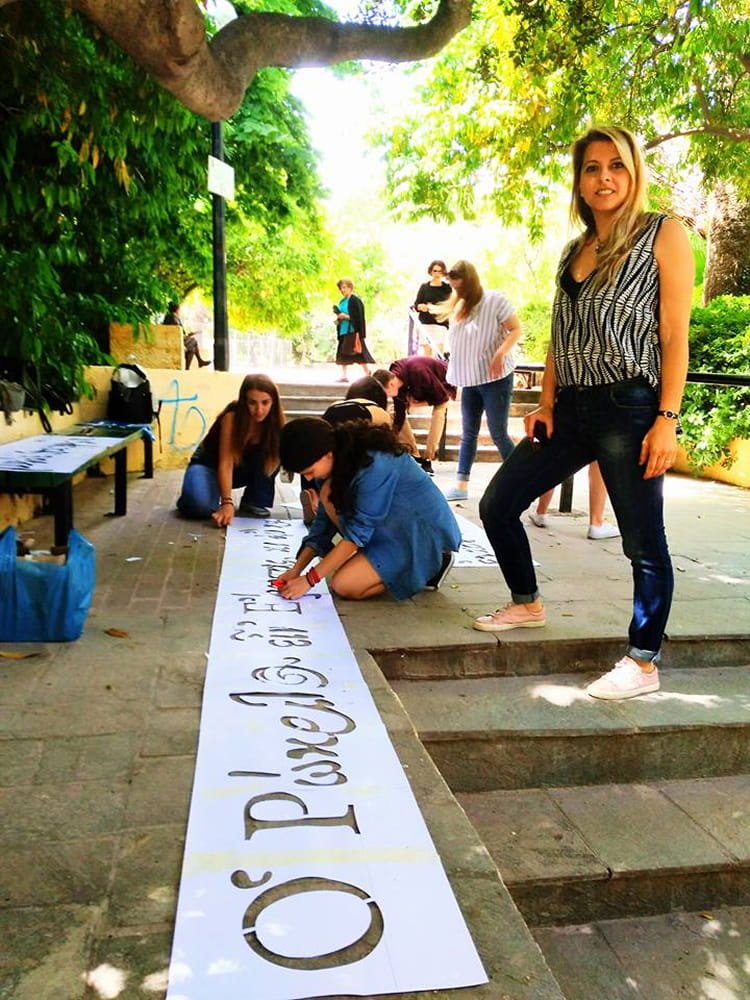
To publicize the campaign and raise its profile in each city, small events were organized in central locations, where college and high school students composed couplets on the spot and wrote them on cards to hand out to passersby as souvenirs. At the same time, social media and outreach to local media played a significant role in publicizing the events; we gave radio and television interviews, and the media filmed the demonstrations and published features that highlighted our presence and our work.
Over the course of two years, a creative team of college students, professors, and high school students worked together successfully, drawing on the diversity of the participants’ personalities and skills. We learned to work together, to communicate with organizations, local authorities, and private individuals, to broaden our knowledge in various fields, we realized the value of organization and the efficient use of time in achieving common goals, and we discovered new interests and creative talents.
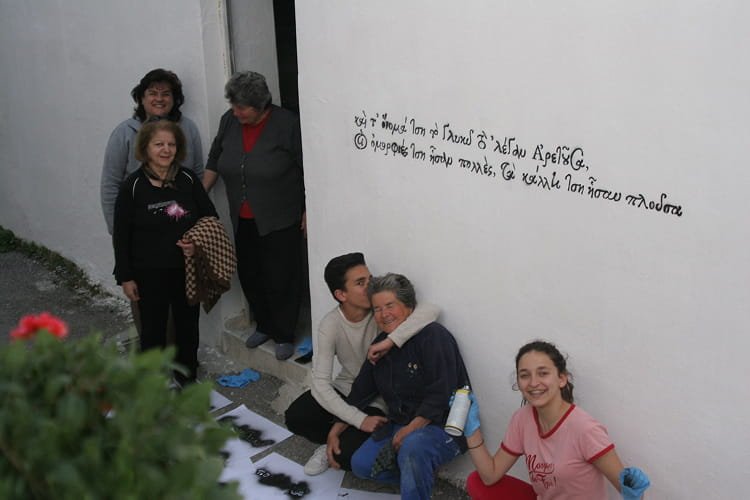
Throughout this wonderful journey, we were encouraged to continue our activities by the warm response of the Cretans, who embraced the effort and sang verses from Erotokritos and Erofili whenever they saw the teams of students and teachers composing couplets.
This activity can be incorporated into the curriculum of any teacher who would like to introduce their students to Greek literature and art as a hands-on workshop that will take place on school grounds or in other public spaces, with the approval of the municipality or the owner.
To this end, the package includes sketches of various couplets from Erotokritos and a brief guide on how to apply the stencil letters to complete the activity. Of course, depending on the circumstances, you can take a unique approach or improvise during the activity. The goal is for your group to create an enjoyable educational experience that highlights knowledge of history, the high quality of early Modern Greek literary works, and the contribution of the written word to our culture.
Good luck!!!
Historical Context
Printing was the technological invention that changed the sociopolitical course of Europe. In the 15th century, the primary source of knowledge was the intellectual heritage of ancient Greek and Roman civilization. When the scholar Aldus Manutius founded Venice’s largest publishing house, he oversaw—together with a dedicated team of philologists, mainly from Crete—the first printed edition of the entire corpus of ancient Greek literature. His decision to set the Greek type according to the script used by his contemporary Greek scholars—who followed the Byzantine minuscule tradition—established this practice in all the printing houses of Europe.
When, in the mid-16th century, the Royal Printing Office of France decided to publish a new edition of ancient texts, Angelos Vergikios, the most distinguished Cretan scholar and calligrapher, was commissioned to create, together with the type designer Claude Garamont, the striking Greek typeface Grecs du roi.
The unparalleled design quality of the calligrapher’s Byzantine cursive script, with its rich collection of letter clusters, abbreviations, and decorative flourishes, was rendered with great skill by the engraver and impressed all of Europe, remaining the standard for Greek elements until the Enlightenment.
Historical Context
At a time when the rest of Greece was already under Turkish rule, Crete—as an important Venetian possession—flourished economically and experienced the Italian Renaissance through the local population’s contact with the mother country. From the late 16th to the mid-17th century, at the height of European Humanism, Cretan culture flourished with significant artistic works, primarily in the fields of theater, literature, and iconography.
Two significant works appeared: Erotokritos by Vitsentzou Kornaros and Erofili by Georgios Hortatsis, both of which had a decisive influence on the development of Modern Greek literature as a whole. These folk works, drawing on European chivalric romance, express the spontaneous poetic voice of the Cretans and remain popular to this day. Cretan theatrical production later served as a model for theatrical creation in the Ionian Islands and the Aegean region, and the influence of its verse was catalytic for our most important modern poets, such as D. Solomos, K. Palamas, and A. Sikelianos.
Historical Context
Street art is an internationally recognized form of visual expression and communication by various artists, in public or private spaces that offer visual access to a wider audience, and is created using a wide variety of techniques and materials.
Graffiti has also made its way into the Greek urban landscape, and a growing number of young people are engaging in this activity, though to a large extent they indiscriminately imitate the typographic choices of Anglo-Saxon models (Gothic script, etc.), while ignoring the rich world of Byzantine calligraphy as its source.
Publications in the local, national, and international press
Students & Teachers in Action
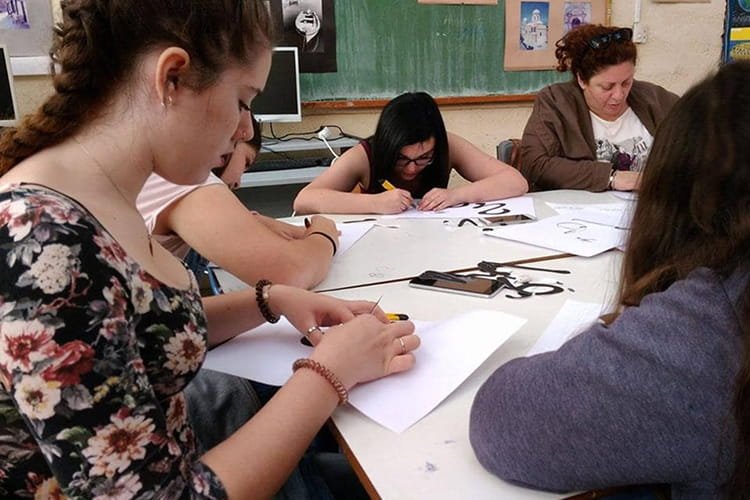
The following photographs are the result of the efforts of many school groups throughout Crete (2017–2018) and vividly illustrate the interest and creative enthusiasm with which teachers and their students embraced the initiative.