


The Poet of Abraham's Sacrifice
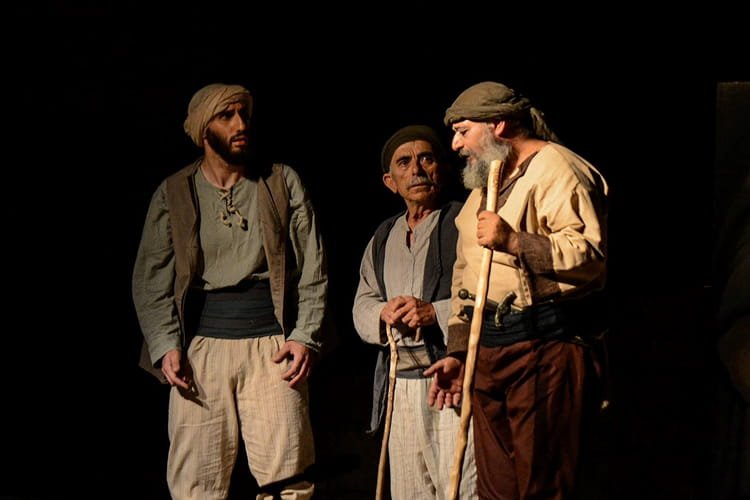
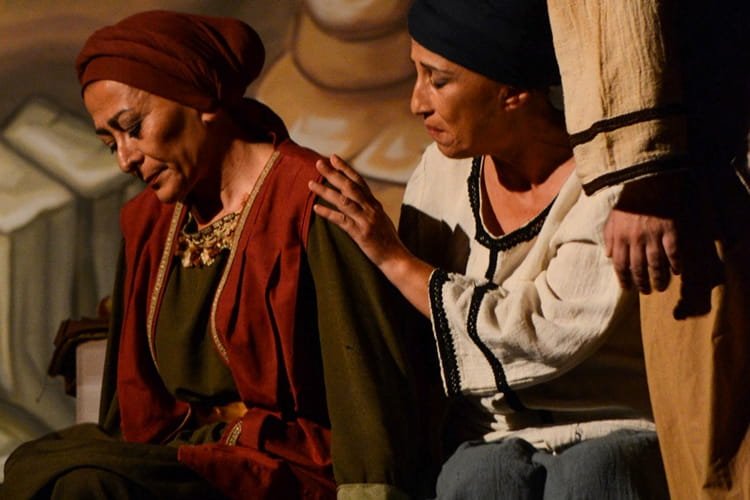
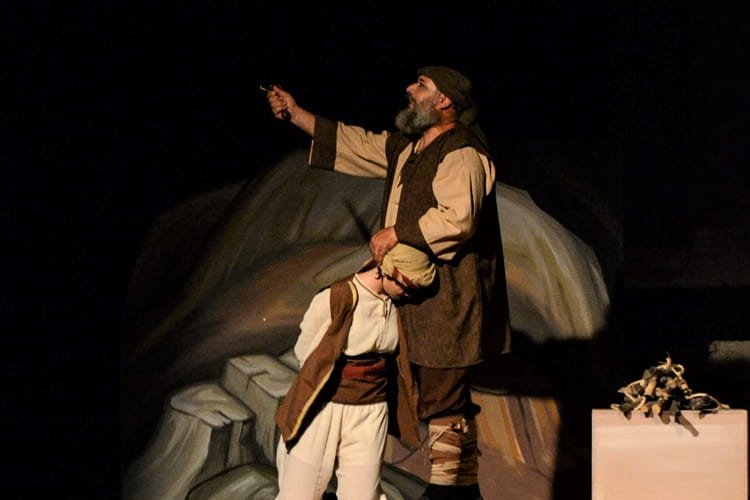
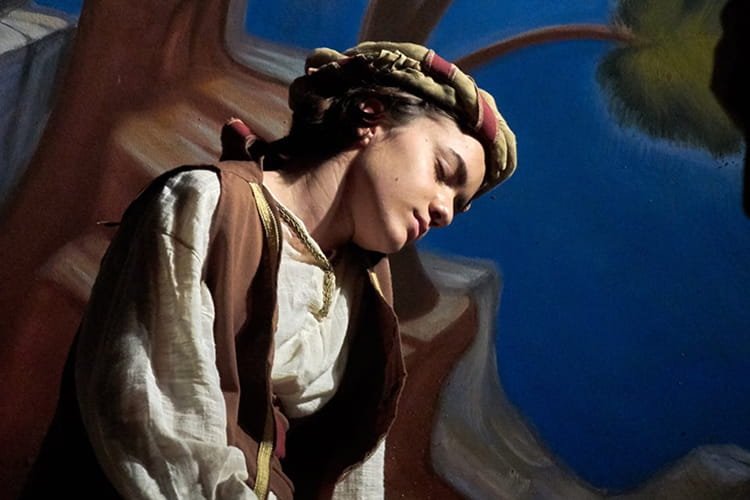
The religious drama The Sacrifice of Abraham deals with the well-known Old Testament episode of God testing Abraham’s faith (Genesis XXII). The work is believed to have been written around 1600 (1586-1635), in the Eastern Cretan dialect, and consists of 1144 rhyming fifteen-syllable verses.
The action begins with the appearance of the Angel to a sleeping Abraham, followed by dramatic dialogues with Sarah, the preparation for the sacrifice, and the three-day journey to Mount Moriah. There, Abraham leaves his two servants behind to proceed alone with his unsuspecting son Isaac to the top of the mountain. At that point, the prayer, the trial, the redemption, and the symbolic sacrifice of the ram will take place. The work concludes with the joyful announcement of the return of father and son and their welcome by Sarah, exhausted from grief, and their servants.
The Sacrifice of Abraham was first printed in 1696 and became an extremely popular read, as evidenced by its successive editions. Ioannis Mavrogordatos identified the work’s prototype in Luigi Grotto’s (1541-1585) drama “Lo Isach, rappresentazione nova,” first published in Venice in 1586. However, the Cretan work approaches its prototype with great creative spirit: It does not follow the established theatrical arrangement and division into prologue, acts, scenes, and choruses. It introduces internal action and, most importantly, treats human characters differently. The heroes of The Sacrifice, originating from across the spectrum of social life, are thoughtful personalities with reason, emotion, and sentiment. Their final choice, reached through dramatic internal struggle and examination of contradictions, becomes an act of faith and a product of conscious decision.
The warmth of the language and verse brings the work close to the pinnacle of Cretan literature, Erotokritos: The similar expressive means, identical verses, and innovative approach to the Italian prototype had led scholars to conclude that the poet of The Sacrifice of Abraham was Vitsentzos Kornaros (St. Xanthoudidis, L. Politis, E. Kriaras). However, recent systematic research has weakened the validity of the aesthetic criterion and demonstrated that further study of the deep structure of the language, the ideological background, and the versification of the two works is required, questioning the attribution of The Sacrifice of Abraham to the poet of Erotokritos.