


The Poem Erotokritos
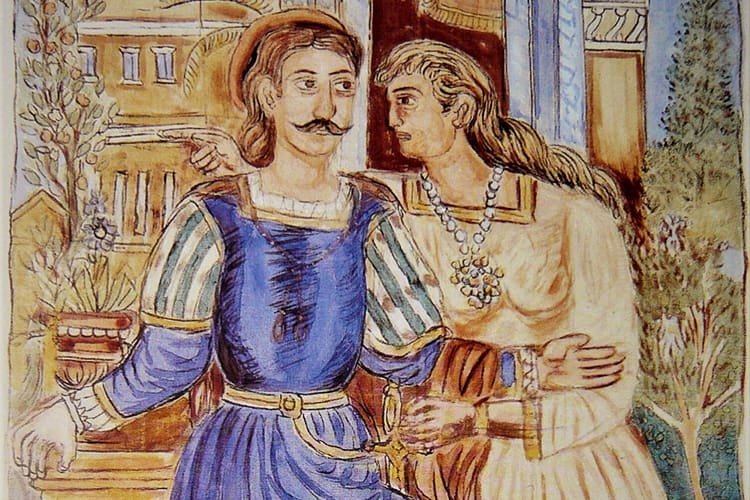
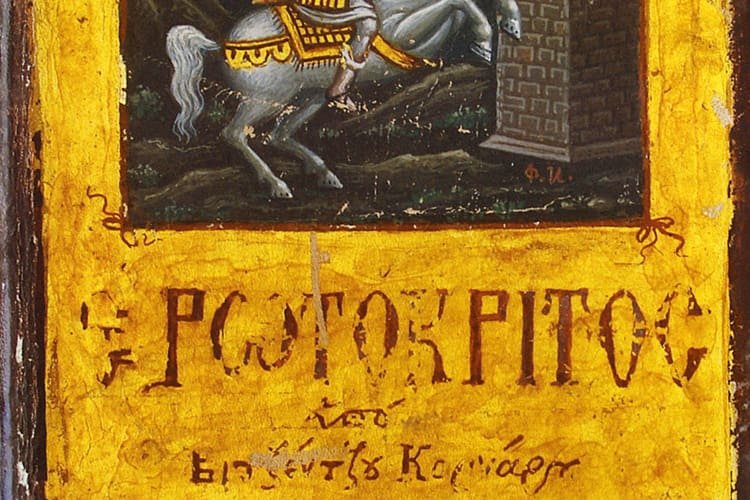
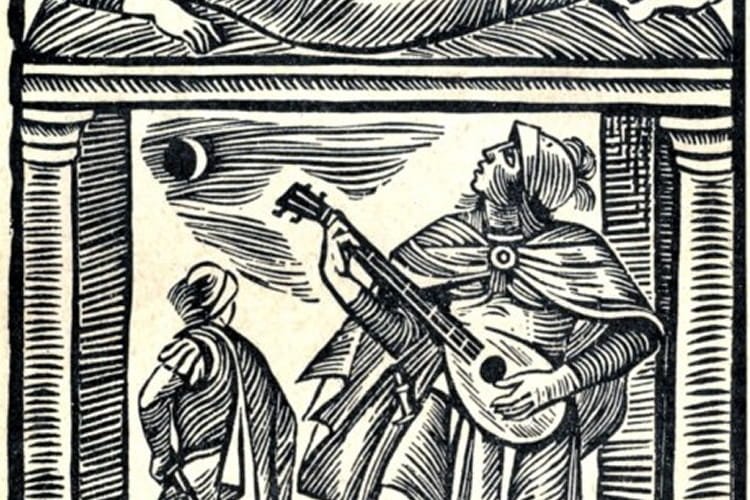
Erotokritos by Vitsentzos Kornaros is one of the masterpieces of Modern Greek Literature. It is a verse novel spanning 10,012 rhyming fifteen-syllable verses.
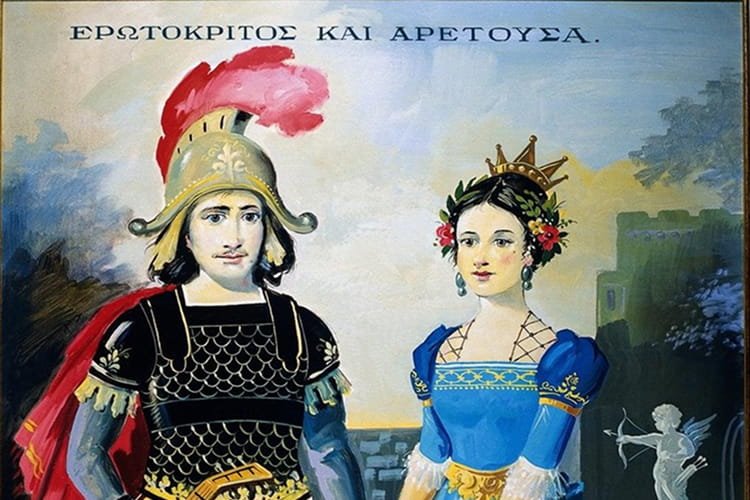
It was written in Sitia and Heraklion around 1600 AD, during the peak of the Cretan Renaissance, which was in no way inferior to the Renaissance schools of the West. It narrates the great love story of Erotokritos, a young man of many graces but not of royal lineage, and Princess Aretousa. The plot shares many similarities with Pierre de la Cypède’s work Paris et Vienne, published in 1487, but the Cretan masterpiece is incomparably superior in literary and thematic terms. Its plot is organized into five sections: Love, Bravery, Ordeal, War, Redemption.
The work flows and is beloved thanks to the wonderful local dialect of Eastern Crete and the rhyming distich iambic fifteen-syllable verse, which is also known from mantinades. It celebrates love, friendship, valor, but also the Renaissance man’s right to happiness and the liberating struggle against any authority—religious, royal, or paternal—that impedes this happiness. The work also champions gender equality. Erotokritos was immediately embraced by the people, who made it a guide for life and a song. Conversely, its acceptance by scholars went through various phases until it reached its current universal recognition. It was considered by some to be light reading, detrimental to linguistic, national, and moral ideals; some even went so far as to rewrite it in Katharevousa.
Erotokritos has been translated into many foreign languages, is taught in universities abroad, and continues to inspire musicians, directors, sculptors, and painters.